Start with the specific device, not a generic protocol
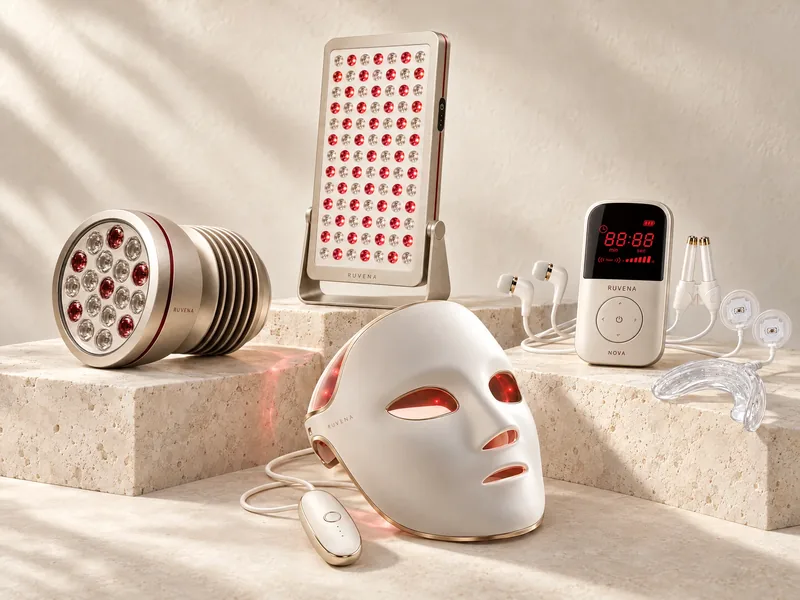
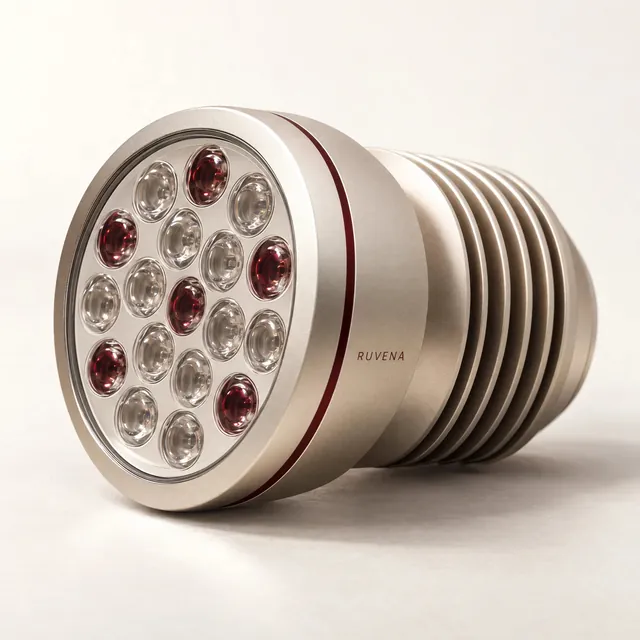
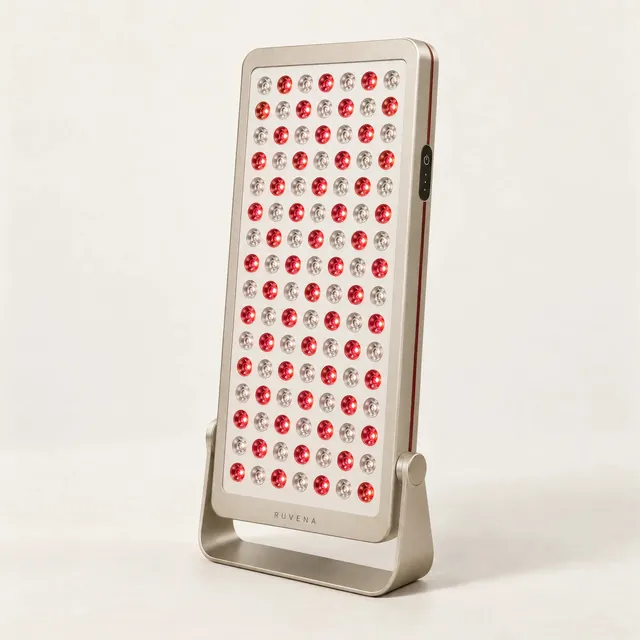
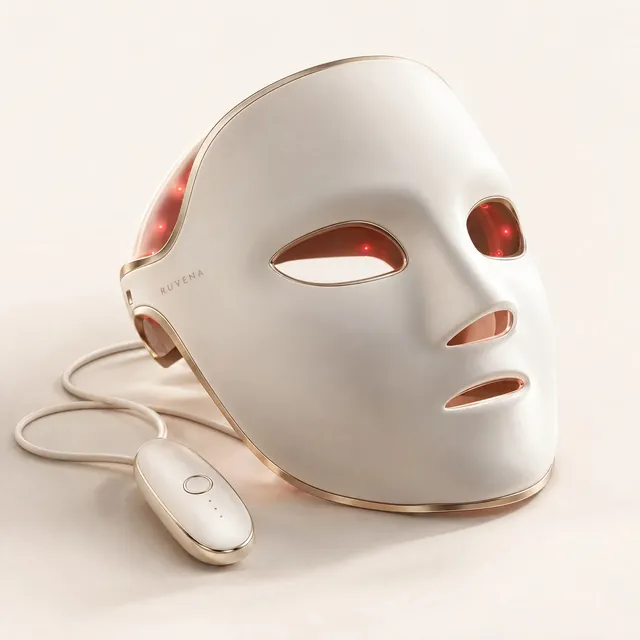
Focus compact lamp, Balance panel and Aura mask are different home-routine formats. Distance, session length, frequency, treatment area and eye protection should follow your RUVENA device instructions. No universal schedule is proven safe for every red-light product. The American Academy of Dermatology says the optimal amount and long-term safety of at-home use are still being clarified, and recommends following the device directions. [1]
That is also the right frame for realistic expectations: research on one professional or home system is not proof for another product. We do not transfer clinical-study findings to Focus, Balance or Aura. If you have an active skin concern, an unexplained change or a condition that normally needs treatment, ask a dermatologist for an assessment first. [1] [2]
Eyes: do not stare at the source or improvise protection
Bright visible light can be uncomfortable, so do not direct a device toward open eyes or look straight into its LEDs. When the instructions for your model require protective eyewear, use the recommended type every time. The AAD specifically says sunglasses are not a substitute for protective goggles when a manufacturer calls for eye protection; Cleveland Clinic also advises safety goggles or similar eye protection for bright LED treatments. [1] [2]
A systematic review of light therapy found no evidence of eye damage in physically healthy, unmedicated people, apart from one reported case involving a photosensitising antidepressant. Its authors also concluded that more research is needed for people with pre-existing eye abnormalities or increased photosensitivity. Seek advice from an eye-care professional before home use if you have inherited eye disease, visual changes or other eye symptoms. [3] [2]
Photosensitivity, medicines and blue light deserve extra care
Photosensitivity means the skin or eyes react unusually to light. Conditions associated with light sensitivity, such as lupus, may worsen with red-light exposure, and medicines that increase skin sensitivity to light can change whether treatment is appropriate. Cleveland Clinic lists isotretinoin and lithium as examples; they are not a complete medicines list. Before starting, ask the prescribing clinician or pharmacist if you have reacted to light. [1] [2]
If a product offers blue light, do not assume that the same approach applies as for red light. Blue light acts closer to the skin surface, and Cleveland Clinic notes research suggesting it may contribute to oxidative stress in skin. Because it can be bright, avoid looking at the source, use only the intended mode and do not extend a session beyond the instructions. [2]
Pregnancy: make it an individual decision, not a home experiment
Pregnancy is not a time to rely on a generic online answer or to assume all light-based devices are alike. A review of dermatologic procedures says satisfactory safety data are lacking for cosmetic lasers and IPL, and recommends deferring those aesthetic procedures until after delivery. That review does not directly study RUVENA LED devices, but it shows why evidence about one light technology should not automatically be carried over to another. [4]
If you are pregnant, planning pregnancy or breastfeeding, speak with your obstetric clinician and, where relevant, a dermatologist before using Focus, Balance or Aura. They can consider the reason for use, treatment area, medicines and your history. Caution is not a claim that the device has been shown to harm pregnancy; it means the decision should not rest on a universal home-use protocol. [1] [4]
When to stop immediately and whom to contact
Stop a session straight away for pain, worsening burning, a new rash, hives, swelling, marked redness or increased inflammation. Cleveland Clinic includes these reactions among potential side effects or signs for contacting a healthcare professional. Do not try to push through a reaction or restart until you understand what caused it. [2]
Also stop for eye discomfort, light sensitivity, blurred vision or any other new visual change. The eye-safety review recorded ocular discomfort and vision problems among reported complaints, and calls for additional caution in people with photosensitivity or existing eye conditions. For persistent, severe or worrying symptoms, contact a clinician promptly. A safer routine starts conservatively, stays within the instructions and puts health ahead of a treatment schedule. [3]
Sources
Find your light ritual.
Face care, a targeted area or a little more space? A few simple questions help you find the device that fits your everyday life.
- Five short questions
- Clear reasons for your match
- All four RUVENA devices