What LED light can realistically offer
LED light therapy is a noninvasive approach in which red and near-infrared light are often discussed for skin. Dermatology practices use it for different concerns, and colours and wavelengths do not reach the skin in the same way. That distinction matters: “LED light” is not one fixed treatment with one predictable outcome. [1] [2]
For visible signs of ageing, the evidence described by dermatology sources suggests possible changes in fine lines, texture, redness or uneven tone. With an at-home mask or portable device, a subtle change in appearance is a more realistic expectation than dramatic wrinkle erasure. Results are not immediate, regular use matters and skin does not respond uniformly. [1] [2]
Why one study is not a recipe for every at-home mask
Studies do not test the same devices, wavelengths, output, distance from skin or exposure schedules. The American Academy of Dermatology therefore notes that results cannot simply be compared across studies, and that the optimal at-home dose and duration for particular goals are still unknown. [1]
A systematic review of home dermatology devices found a limited number of randomized trials and a lack of long-term data. Its recommendation for home LEDs concerned acne vulgaris, not a blanket confirmation that every LED mask reduces wrinkles. That is a useful reason to treat anti-ageing claims as a possibility rather than a promise. [3]
Focus, Balance and Aura: choose a format, not a promise
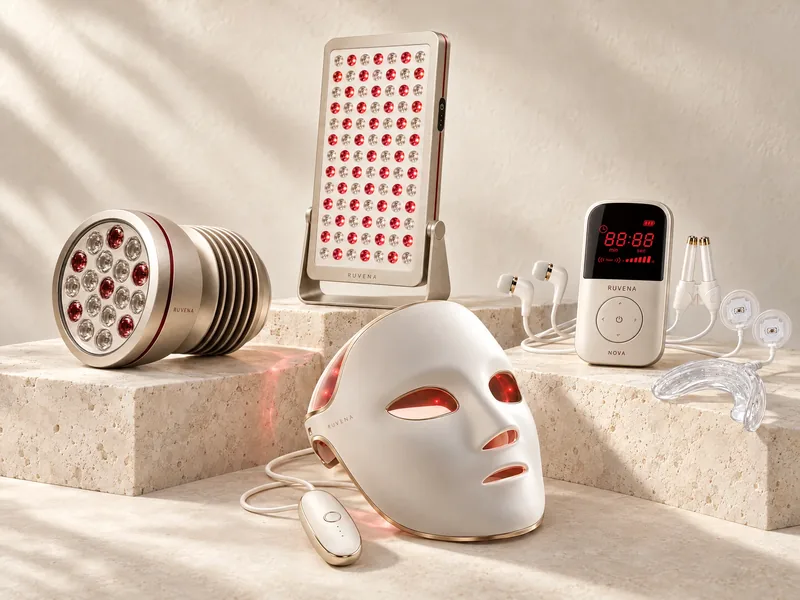
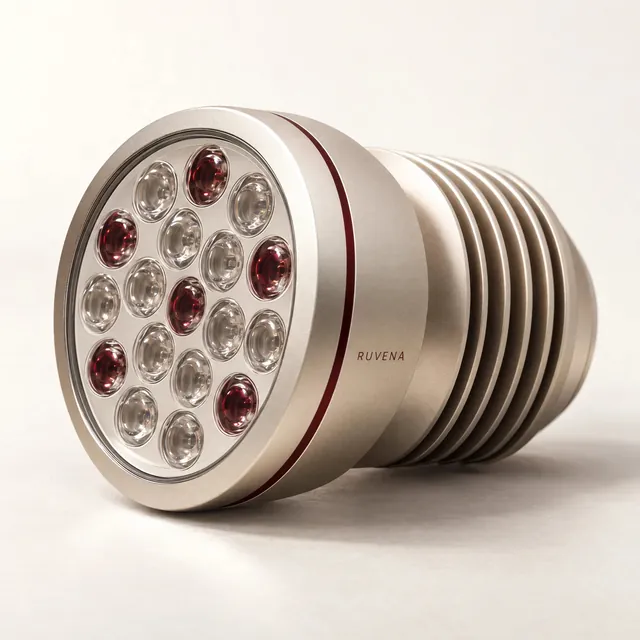
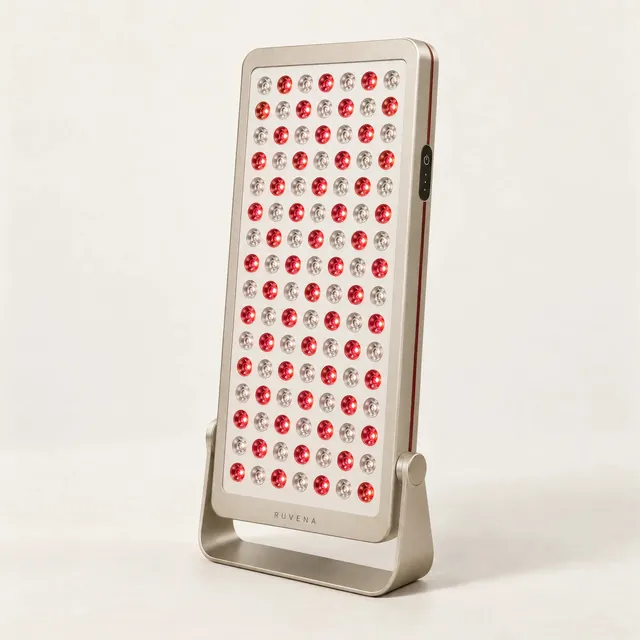
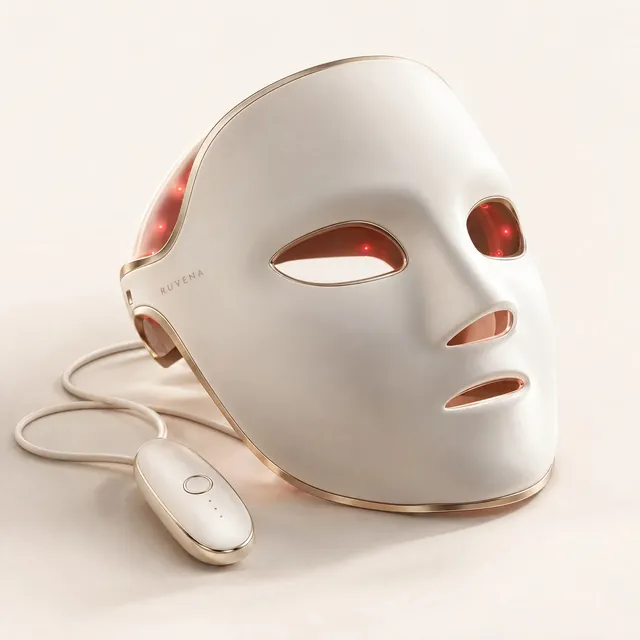
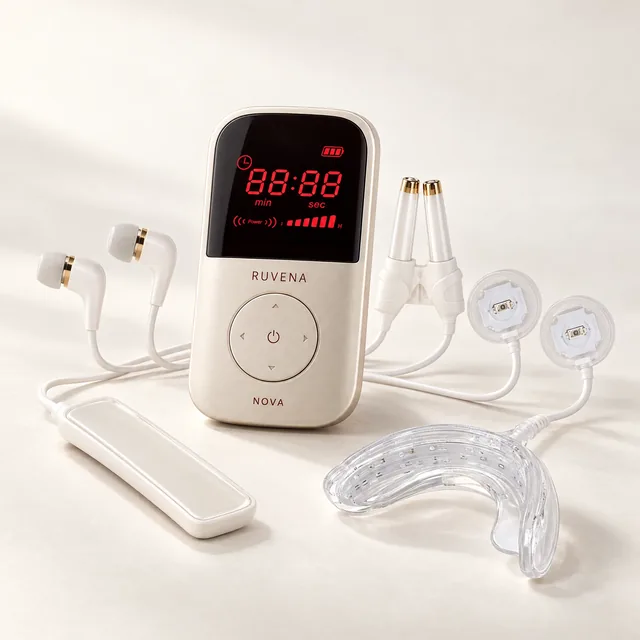
RUVENA Focus compact lamp, Balance panel and Aura mask offer three ways to fit light into a personal routine. A format may help with convenience and treatment area, but the words mask, panel or lamp do not by themselves tell you the light characteristics, exposure or wrinkle result tested for that particular product. [1]
Before buying, it is sensible to read the manufacturer’s directions, intended use and warnings, then relate them to your own goal. A clinical result reported for another device should not be carried over to Focus, Balance or Aura. Even a regulatory label, where one is stated for a particular device, is not by itself proof of effectiveness; AAD distinguishes low-risk clearance from evidence of benefit. [1]
A safe start needs an individual check
There is no universally safe schedule for an unverified device. Follow its supplied directions and use eye protection if it is specified. Speak with a dermatologist before home use if you have a light-sensitive condition such as lupus, take medicines that increase light sensitivity, or have a relevant history of skin or eye disease. [1] [2]
In the short term, LED therapy is generally described as low risk, but temporary irritation, redness, rash or pain can occur and long-term safety is not fully understood. Stop using the device if you develop a reaction and seek professional advice. Do not automatically treat a changing spot, sore or pigmented mark as a cosmetic concern for a home device. [1] [2]
Basic skincare and SPF still come first
LED light does not use UV, but that does not make sun protection optional. Keep gentle cleansing and moisturising that suit your skin, and when skin is exposed to sun choose broad-spectrum sunscreen with SPF 30 or higher. Broad-spectrum sunscreen protects against UVA and UVB; AAD also links sunscreen use with helping to prevent early signs of skin ageing. [2] [4]
The most useful position for LED is as an add-on: photograph your baseline in the same light, notice how your skin tolerates the routine and assess change without rushing. If your goal is treatment for an active skin condition, marked pigment change or inflamed lesions, an individual dermatology assessment should take priority over at-home trial and error. [1] [2]
Sources
Find your light ritual.
Face care, a targeted area or a little more space? A few simple questions help you find the device that fits your everyday life.
- Five short questions
- Clear reasons for your match
- All four RUVENA devices